Burnout Symptoms in High Performers: The Signals You Are Trained to Ignore
The people most likely to burn out are the people least likely to notice. Not because the signals are subtle, but because a high performer has spent twenty years training himself to override exactly these signals. Tired is a Tuesday. Cynical is realism. Slipping output is a reason to push harder.
That override skill built your career. It also removes the alarm system everyone else has. So this report does something specific: it takes the official definition of burnout, signal by signal, and translates each one from textbook language into what it actually looks like in a strong operator who is still hitting his numbers.
What burnout officially is, and is not
Burnout has a real definition, and it is sharper than the way the word gets thrown around. The World Health Organization classifies burnout in the ICD-11 as an occupational phenomenon resulting from chronic workplace stress that has not been successfully managed. Three things about that definition matter to you.
First, it is occupational. The WHO is explicit that the term refers specifically to the work context and should not be applied to other areas of life. This is not a personality diagnosis. It is a description of what chronic, unmanaged work stress does to a person.
Second, it is a process, not an event. Chronic stress, not successfully managed. Nobody burns out on a Thursday. You burn out across quarters, which is exactly why the signals are easy to explain away one week at a time.
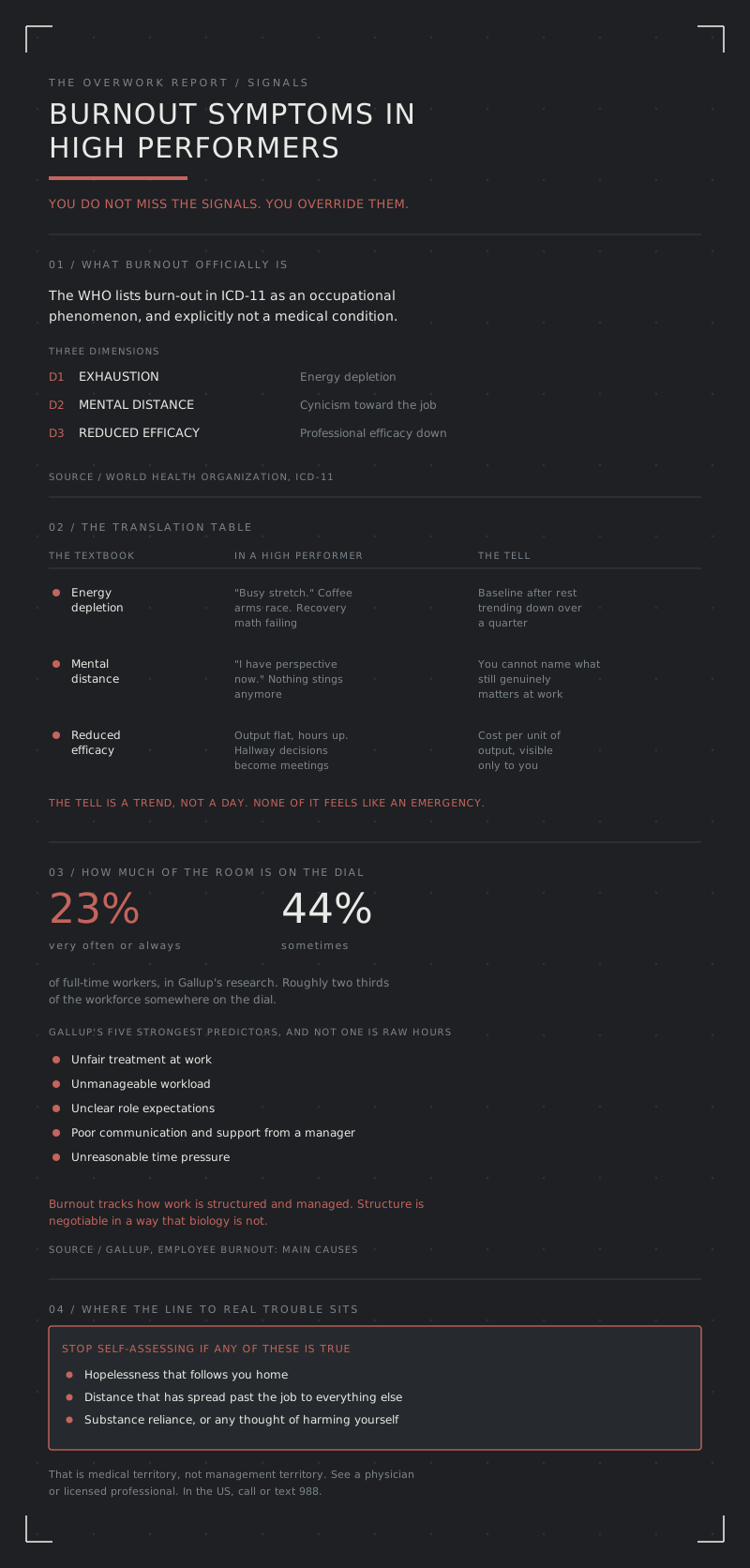
Third, it has three specific dimensions: depleted energy, increased mental distance from the job or cynicism about it, and reduced professional efficacy. Those three are the instrument panel. Here is how each one reads in a man who is good at ignoring instruments.
Signal one: the exhaustion that sleep stops fixing
Textbook exhaustion sounds like being tired. What it looks like in a high performer is stranger: the recovery math stops working. A full night of sleep returns you to eighty percent, not a hundred. The weekend no longer resets the week. The first vacation day used to clear your head; now the whole week barely does.
You will not call this exhaustion, because you can still perform. You will call it a busy stretch. The tell is the trend line, not any single day: if your baseline after rest has been quietly dropping for a quarter, that is dimension one, live.
Signal two: the distance you call perspective
The second dimension is the one high performers misread most reliably, because it dresses up as wisdom. Mental distance from the job arrives as detachment that feels like maturity. You stop getting worked up in meetings. Losses that used to sting now produce a shrug. You describe yourself as having perspective now.
Some of that can be real maturity. The test is what replaced the caring. Perspective still cares and chooses its battles. Cynicism has quietly concluded that the battles do not matter. If the honest answer to "what at work still genuinely matters to you" takes more than five seconds, the distance is not perspective.
The version of this that shows up at home, the man present in body and unreachable in practice, has its own mechanics; our sister publication covers that side of the ledger in The Distant Father.
Signal three: the output slip you are hiding with hours
Reduced professional efficacy is the last dimension to surface, because high performers hide it from everyone including themselves. The work still ships. What changed is the exchange rate: tasks that took you two focused hours now take four fragmented ones. You reread paragraphs. Decisions you used to make in the hallway now get a meeting.
The tell is not output. Your output is defended by professional pride and it will be the last thing to fall. The tell is cost per unit of output, and only you can see it.
The translation table
| The textbook says | In a high performer it looks like | The tell |
|---|---|---|
| Energy depletion | "Busy stretch." Coffee arms race. Recovery math failing | Baseline after rest trending down over a quarter |
| Mental distance, cynicism | "I have perspective now." Nothing stings anymore | You cannot name what still genuinely matters at work |
| Reduced efficacy | Output flat, hours up. Hallway decisions become meetings | Cost per unit of output, visible only to you |
Why two-thirds of the room is quietly nodding
If some of this reads uncomfortably specific, the company you are in is large. Gallup's research on full-time workers found 23% report feeling burned out at work very often or always, and another 44% sometimes. That is roughly two-thirds of the workforce somewhere on the dial.
The same research carries the finding that matters for what you do next: the strongest predictors of burnout are not raw hours. Gallup's top five causes are unfair treatment, unmanageable workload, unclear role expectations, poor communication and support from a manager, and unreasonable time pressure. In other words, burnout tracks how the work is structured and managed. Which is good news wearing a bad disguise: structure is negotiable in a way that biology is not. That negotiation is its own report: how to recover from burnout without quitting your job.
Where the line to real trouble sits
Everything above is the occupational zone, where the fix is changing how you work: load, structure, boundaries, recovery. The playbook for the boundary side is here: work-life balance is a boundary problem, not a time problem.
But there is a line, and you should know exactly where it is. Burnout overlaps at its edges with depression and anxiety, which are medical territory, not management territory. If the exhaustion comes with hopelessness that follows you home, if the distance has spread from your job to your family and everything else, if there is substance reliance or any thought of harming yourself, stop self-assessing. That is beyond any article, including this one. Talk to a physician or a licensed professional. In the United States, in a crisis, call or text 988.
Reading the instrument panel honestly is not weakness. Pilots do it precisely because they intend to keep flying.
The signals, in one picture
The instrument panel above, compressed into a single reference you can check honestly once a quarter.
Test yourself
Five questions on the three signals. Score yourself the way you would read an instrument panel: honestly, before it is flashing red.
Key takeaways
FAQ
What are the first signs of burnout in high achievers?
The earliest reliable sign is recovery failure: sleep, weekends and time off stop resetting your baseline the way they used to. It typically arrives before the visible signs, the cynicism and the output slip, because high achievers defend output longest. Track your baseline after rest over a few weeks; the trend tells you more than any single bad day.
Can you be burned out and still perform well?
Yes, and this is exactly the high performer's trap. The WHO's third dimension, reduced efficacy, shows up first as rising cost per task rather than falling output: same results, more hours, more friction. Performance is usually the last visible thing to break, which is why waiting for output to drop before acting means acting late.
Is burnout a medical diagnosis?
No. The WHO classifies burnout in the ICD-11 as an occupational phenomenon, not a medical condition, and limits the term specifically to the work context. That said, its edges overlap with depression and anxiety, which are medical. If symptoms follow you outside work, or include hopelessness or thoughts of self-harm, see a professional rather than self-diagnosing burnout. In a US crisis, call or text 988.
Last reviewed by The Overwork Report Editorial Team on July 28, 2026. Our sourcing and AI-use rules are public on the editorial standards page.
Sources
- an occupational phenomenon resulting from chronic workplace stress that has not been successfully managed (who.int)
- refers specifically to the work context and should not be applied to other areas of life (who.int)
- The Distant Father (fatherstandard.com)
- 23% report feeling burned out at work very often or always, and another 44% sometimes (gallup.com)